Dental Essence

Ali - Dental Essence Admin

Orthodontist demonstration

ALL YOU NEED TO KNOW ABOUT DENTAL SCALING AND POLISHING IN SINGAPORE

ALL YOU NEED TO KNOW ABOUT DENTAL SCALING AND POLISHING IN SINGAPORE We are often advised to visit the dentist twice a year to ensure our dental health. If you have  been taking that advice you probably already know that during these visits, you will go through a scaling and polishing procedure which is often referred to as teeth cleaning. But you may wonder what it is all about.And if you have not been going to those recommended visits; What is scaling and polishing, and why is this procedure so important you ask? Read on to know all about it as we provide you with the answer to all your concerns! What is Teeth Scaling and Polishing? Teeth Scaling and Polishing is one of the most common services conducted by dentists. You are advised to go through this procedure because despite the daily brushing and flossing of your teeth, plaque is still able to build up which in the long run, could potentially cause gum diseases or tooth decay. Hence, these check ups for a cleaning session is necessary.  The scaling procedure is done to remove hardened plaque called calculus which causes teeth damage and gum diseases. The removal is done using ultrasonic scalers to make sure that no damage is done to the teeth through the use of ultrasonic vibrations. In the past, hand scalers were used, but this modern device can do it in a much shorter period of time.  Image Source: Shutter Stock Polishing is often followed after scaling as scaling leaves the teeth feeling rough. The device used during polishing is a spinning polishing brush or cup that removes stains and left over plaque on the surface of your teeth while smoothening the external surface of your teeth. The reason this smoothening procedure is included is because it will make it harder for dirt to attach itself to your teeth due to the smooth and less frictional texture disallowing it to do so.  The cleaning session often ends with the application of a concentrated fluoridated gel when your dentist sees it necessary. If you have gone through it before you may have realised its distinct sweet flavour. This gel is lathered on to prevent tooth decay by making your teeth resistant to bacteria. Why Should I Go Through Scaling and Polishing Procedures for my Teeth? Brushing and flossing your teeth may slow down the growth of plaque and tartar, but they will eventually form nevertheless. To ensure the health and glow of that smile, scaling and polishing your teeth is recommended. When the dentist scales and polishes your teeth you will surely come out of their clinic with a brighter and fresher smile than before. Teeth stains, especially extrinsic teeth stains caused by your diet (coffee, tea, and red wine) and tobacco consumption is inevitable at some point. Polishing your teeth at the recommended time would ensure that you maintain that bright white smile.  On the other hand, harmful bacteria that could cause gum inflammation and tooth decay is able to live and prosper in the plaque and tartar in your teeth as well as under your gums. Professional scaling and polishing will remove the tartar build up while your dentist can spot any irregularities on your teeth that may be harmful such as cracks. Continue to visit the dentist regularly to ensure your overall dental health and that any signs of detrimental dental issues can be spotted early on.  To add on to these facts, scaling and polishing at the recommended rate can save you from bad breath! Say goodbye to bad breath and hello to a fresh and confident smile through scaling and polishing. If you need further reasons as to why you should go through with the procedure, let us tell you that scaling and polishing is fundamental to many dental procedures including getting braces, invisalign, teeth whitening, cosmetic filling and more. This is because it ensures the cleanliness of the area that is focused on in the mentioned procedures. For instance, during teeth whitening, scaling and polishing is done to clean the surface of your teeth so that the whitening agents are not blocked by tartar or stains on your teeth. Another instance is when getting fillings done, your teeth go through the procedure in order for the fillings to not get contaminated.  How Does The Process of Scaling and Polishing Go? Image Source: Shutterstock First of all, once you have made your appointment and called into the dentist’s office, your dentist will examine the condition of your teeth and gums which will then be proceeded with scaling and polishing.  The scaling process will be done by removing the plaque and tartar on your teeth and the line of your gum through the use of an ultrasonic cleaning tool. In some instances, Root-Planning might be required to remove tartar that is attached on the root surfaces of the gum. This is usually done with the traditional hand scaling tool.  The next step is polishing. Once scaling is completed, the teeth might feel a little rough and have some stains on the surface of the teeth. For tough stains, an air-powder spray is used while in usual circumstances a rotating brush with cleaning paste is used. Your teeth will look smooth and glossy after this procedure. On top of that, polishing will also make your teeth easier to clean and maintain at home because the smooth surface makes it hard for plaque to stick.  With that, you’re all done! Walk out with a fresher, brighter, and cleaner smile into your next pursuit.  Frequently Asked Questions Next, we have the periapical radiograph which is a smaller type of X-ray that captures the precise image of a specific section of teeth from the roots to the crown. It is also able to capture an image of the bony mass surrounding the roots of a tooth. Normally, the periapical radiograph is used to assess the ligaments around the roots of a tooth to detect a possible

ALL YOU NEED TO KNOW ABOUT DENTAL SCALING AND POLISHING IN SINGAPORE Read More »
Dental branding graphic (appears duplicate)

DENTAL EMERGENCY IN SINGAPORE

DENTAL EMERGENCY IN SINGAPORE Toothaches or dental accidents can be very bothersome and painful especially when there is no professional to advise you during public holidays, vacations, or in the middle of the night. The pain that comes with your toothache can vary. Some experience mild discomfort while others go through unbearable pain depending on what the cause of the pain is. This pain can be caused by gum disease, jaw joint problem, exposure of the root canal, or an infection. Urgent attention is needed if you are feeling abnormal pain that shoots up from your teeth to your eye or near your ears. The wisest decision in this circumstance of a toothache or a dental accident, is to contact a dentist immediately, or in the case of public holidays and such, look for an emergency dental clinic.  Top Issues That Would Require Emergency Dental Services Image Source: Shutterstock Some dental emergencies such as toothaches can be solved at a typical dental clinic. However, some dental emergencies require urgent attention. So what are instances of these urgent situations?  Fractured or Broken Tooth Teeth are very strong, but it is possible for them to fracture or even break. This can happen in a number of ways such as:  Biting down on something hard Being hit in the face or mouth Falling/Trauma Having cavities that weaken the tooth Having large, old amalgam fillings that do not  support the remaining enamel of the tooth Trauma on the mouth area can often lead to painful fractures in your tooth or break it all together. Accidental injury or trauma that caused the fracture or break can lead to unbearable pain or discomfort. In most cases, such incidents would happen to sports athletes or children from taking playtime too far. Fractures can be solved with crowning or filling the tooth. In instances where the pain is involved, dentists would perform root canal therapy.In the case of a broken tooth, be sure to visit the dentist right away so they can figure out if the tooth’s nerve is in danger. A damaged nerve usually will require root canal treatment. Before you go for your visit to the dentist, here are some things you can do when you have a broken tooth: Thoroughly rinse your mouth with warm water Apply pressure with a piece of gauze on any bleeding areas for around 10 minutes or until the bleeding stops. You may also use a tea bag to put pressure on the area to stop the bleeding. Apply a cold pack to the cheek or lips over the broken tooth. This will help reduce swelling and relieve pain Cover your tooth with dental cement if you are unable to reach your dentist right away. Dental cement is typically sold in pharmacies. Take an over-the-counter pain medication. Lost or Broken Crown Breaking the crown on your teeth is not a rare occasion. Most of us expect to have our dental crown last for a decade or more but accidents can happen and the crown can break. The first thing to do after breaking or losing a crown is to inspect the area. Failing to take immediate care of the breakage can result in serious dental problems. Here are some instances of when you would need to go for an emergency visit to your dentist:  If the crown or underlying tooth has a jagged edge or angle that can injure your tongue or inner cheek You are experiencing unbearable pain The crown is dangling or can be a choking hazard You are unable to entirely remove the crown Dental Decay Dental decay may happen when the tooth’s enamel and dentine softens due to an acid attack from the consumption of sugary foods and drinks. After some time, this acid will create a cavity on the tooth. It may take a while before you feel pain on a decaying tooth. Trying to ignore that discomfort may worsen the decay and cause serious problems such as swelling, unbearable pain, and abscesses. Dental decays can be solved through a root canal treatment. There are 5 stages to a tooth decay:  Stage 1This stage is called the initial demineralization. At this stage, the enamel will lose minerals and a white spot can be seen as an indication of the beginning of a tooth decay.  Stage 2In the instance where the first stage goes unnoticed and untreated, the enamel will further break down and result in cavities forming on your teeth. Stage 3This stage is referred to as the dentin decay stage. Following enamel decay in the second stage, the dentin which is the tissue that is under the enamel will start to decay as well once the enamel is stripped down. It is a much softer tissue compared to the enamel which makes it decay easier and faster.  Stage 4After going through the dentin, the decay would then reach the pulp of the tooth. The pulp contains nerves and blood vessels that maintain the health of your tooth. You may begin to feel and notice swelling near the infected tooth. The pressure from this swelling will cause some level of pain, sometimes unbearable. Stage 5At this stage, the decay that has reached the pulp would cause an infection. This can lead to the formation of abscess. At this point symptoms such as swelling of the gums, face or jaw, fever, and swollen lymph nodes in your neck may be present. You may experience severe pain at this stage and would need an emergency visit to your dentist. Infection Also known as abscess, an oral infection can trigger severely painful toothaches. Getting an emergency X-ray or CT scan to identify the root problem is important. In some cases, a root canal can do the trick, however some situations may call for a total extraction if the tooth is unable to be saved. If you are unable to reach your dentist when you notice symptoms of abscess, you are advised to go to an emergency room. In severe cases,

DENTAL EMERGENCY IN SINGAPORE Read More »

C0A76BF0-28A1-4122-B0E6-74FCFF5D6D37

DENTAL X-RAYS IN SINGAPORE: EARLY DETECTION COULD SAVE YOU!

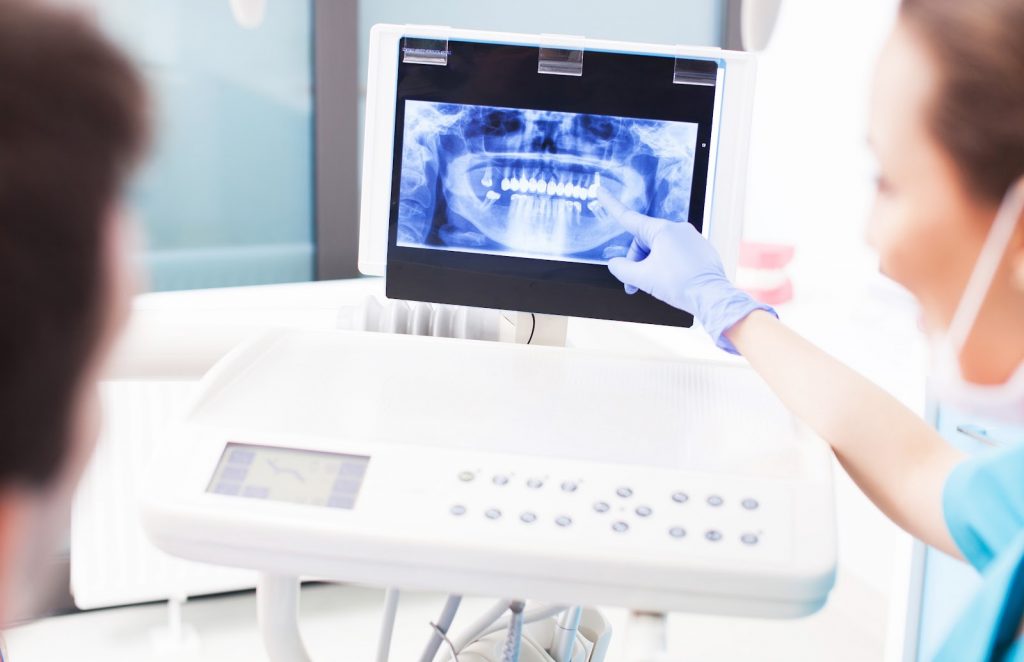
DENTAL X-RAYS IN SINGAPORE: EARLY DETECTION COULD SAVE YOU! Grappling with a toothache? A toothache could be a symptom of an underlying issue such as tooth decay, an impacted wisdom tooth or even a tooth fracture. To determine the root cause of a toothache, dental X-rays can prove beneficial in detecting the presence of tooth decay and identifying possible dental abnormalities. In turn, this allows early intervention to take place to prevent these issues from worsening over time. Here, we will be taking a closer look at dental X-rays and answering some of your most frequently asked questions. What are dental X-rays? Also known as radiographs, dental X-rays are images of your teeth that help dentists evaluate the condition of your teeth, gums and jaw bone. Using low levels of radiation, dental X-rays capture interior images of your teeth and gums. This helps dentists determine if there are underlying issues such as tooth decay, fractures and even impacted teeth. Why do we need dental X-rays? Dental X-rays help give dentists a clearer image of your oral health to treat and prevent potential dental abnormalities. In addition to routine checkups, they help to detect issues that may be present under the surface of your teeth and gums. If left unchecked, gum disease and impacted wisdom teeth can lead to toothaches and painful infections. Hence, it is important to address such issues early on to prevent complications from arising over time. The types of dental X-rays in Singapore Dental X-rays consist of two key categories. On one hand, we have an intraoral X-ray which takes place inside the mouth. On the other, we have an extraoral X-ray which takes place outside of the mouth. Because these X-rays only use low level radiation, they are considered safe to use. In fact, this level of radiation is only equivalent to several hours of exposure to the natural radiation in our environment. We also help to further limit our patients’ exposure to such radiation by having them wear a lead apron or a thyroid shield when having their dental X-rays taken. Overall, there are several types of radiographs available in Singapore that serve different functions Orthopantomogram (OPG) The name orthopantomogram is quite a mouthful, so we tend to use the abbreviation OPG when referring to this 2D radiograph. Also known as a panoramic radiograph, OPG allows dentists to view the patient’s entire mouth in one single image. This includes their teeth, gums and jawbone. Think of it as getting a bird’s eye view of your entire dental structure! The OPG is particularly useful for evaluating the growth and positioning of a patient’s wisdom teeth. Moreover, it only takes less than 60 seconds for the OPG machine to encircle you and have your X-ray taken. Periapical Next, we have the periapical radiograph which is a smaller type of X-ray that captures the precise image of a specific section of teeth from the roots to the crown. It is also able to capture an image of the bony mass surrounding the roots of a tooth. Normally, the periapical radiograph is used to assess the ligaments around the roots of a tooth to detect a possible infection in the bone surrounding the tooth. Bitewing Similar to the periapical radiograph, a bitewing X-ray is able to show a detailed image of a specific section of teeth. However, the bitewing is more suitable for evaluating the crowns of the top and bottom back teeth on each side of the mouth in a single image. This allows dentists to check for tooth decay that may be present in between the back molars that can be difficult to see at a superficial level. Since both the periapical and bitewing are intraoral X-rays, they can be done conveniently in the comfort of a dental chair. Cone-Beam Computed Tomography (CBCT) When a regular 2D X-ray is not sufficient, a dentist will incorporate a CBCT instead. Unlike the OPG, the CBCT produces 3D images of a patient’s teeth, jaw bone, gum tissues as well as nerve pathways in a single scan. Hence, this form of 3D imaging is particularly beneficial for charting out dental implants. It can also help dentists to plan and execute the safe and effective removal of impacted wisdom teeth. Lateral Cephalogram Finally, we have the lateral cephalogram which takes a profile X-ray of a patient’s entire head and skull. This type of X-ray is suitable for planning out orthodontic treatments and diagnosing sleep apnea and temporomandibular joint disorder (TMJD). Frequently asked questions Are dental X-rays safe? Yes, dental X-rays are safe because they only use a low level of radiation. Also, wearing a lead apron or a thyroid shield can further help to minimize a patient’s exposure to this radiation. Is it safe for a pregnant woman to get a dental X-ray? Although it is advisable for pregnant women to avoid dental X-rays, dental emergencies may necessitate the need for a radiograph. To limit their exposure to any radiation, we will provide them with a lead apron or a thyroid shield during the scan. Aside from that, it is generally safe for women who are breastfeeding (or who are trying to get pregnant) to get a dental X-ray. Can I request for a copy of my dental X-ray? Yes you most certainly can! You can either request for a copy to be sent to you via email, in a CD or you can even take a picture of the X-ray using your phone’s camera. How much does a dental X-ray cost? The cost of your dental X-ray can vary depending on the type of radiograph you are getting as well as the location of your dental clinic. Here is a summary of the average costs according to the different types of dental X-rays available in Singapore: Type of Dental X-Ray Price Range Orthopantomogram (OPG) $70 – $150 Periapical / Bitewing (Intraoral) $25 – $50 Cone-Beam Computed Tomography (CBCT) $150 – $300 Lateral Cephalogram $150 – $300 Yes, dental X-rays are safe because

DENTAL X-RAYS IN SINGAPORE: EARLY DETECTION COULD SAVE YOU! Read More »

FC205ABA-B0EC-4BF8-A754-78E912DC4CED

TEETH WHITENING IN SINGAPORE: TYPES, BENEFITS AND HOW IT WORKS

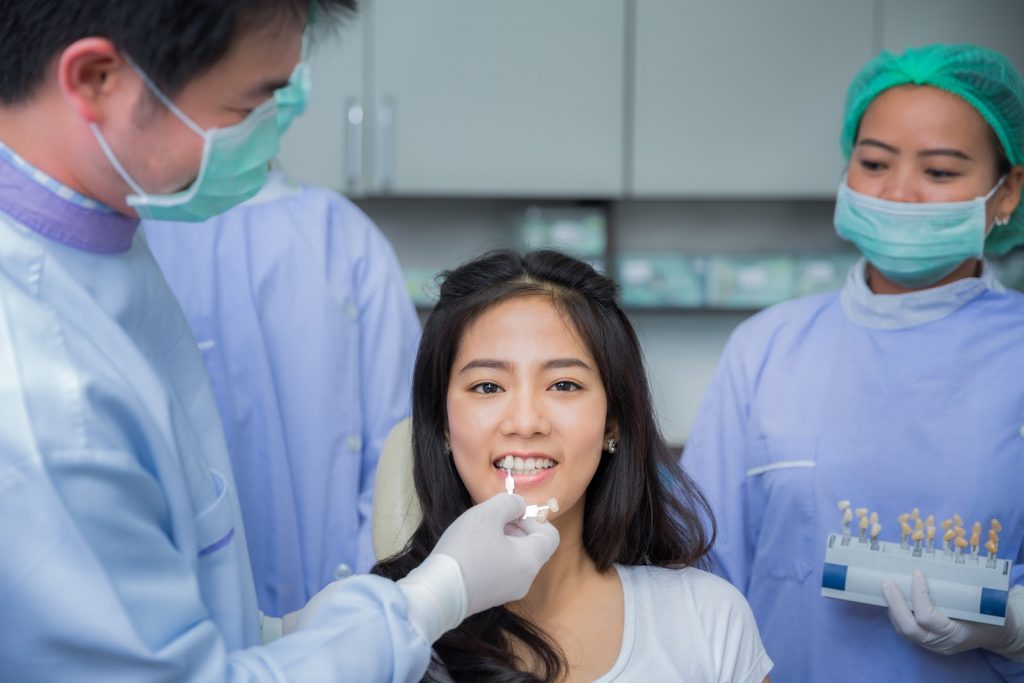
TEETH WHITENING IN SINGAPORE: TYPES, BENEFITS AND HOW IT WORKS Teeth whitening procedures can undoubtedly help to restore one’s self-confidence in one’s smile. Although teeth discolourations are a normal part of life, dental whitening is a common procedure to improve the colour and shine of one’s teeth. To help you understand what this treatment entails, we will be taking an in-depth look at the various methods of teeth whitening in Singapore and how they work. The types of teeth stains First of all, let’s talk about the different types of teeth stains that one can have. Aside from consuming teeth-staining beverages like coffee or tea, the natural process of ageing can also cause discolouration of the teeth over time. Extrinsic stains Like its name suggests, extrinsic stains refer to stains that appear externally on the surface of the teeth. These stains tend to reside and build up in the thin coating of protein that covers the enamel of your teeth. Normally, extrinsic stains can develop when there is a continuous consumption of stain-causing beverages such as coffee, tea, soda and even red wine. Tobacco can also cause extrinsic stains to form on the teeth. Although these stains can look quite severe in some cases, you can easily remove them and keep them in check with routine dental cleaning and whitening toothpastes. Intrinsic stains On the other hand, intrinsic stains are stains that form below the surface of your teeth. Normally, this type of staining occurs when stain particles penetrate the surface of your teeth and accumulate within the enamel. They can sometimes be the result of excessive fluoride consumption during childhood, tooth decay or bleeding from blunt force trauma. Unlike extrinsic stains, these stains are more difficult to remove and will require the use of professional bleaching chemicals and teeth whitening treatments. Age-related discolouration As we get on in years, our teeth can accumulate both extrinsic and intrinsic stains over time. Teeth discolouration is a normal part of the ageing process as the dentin in our teeth tends to turn yellow as we age. Moreover, the enamel of our teeth also starts to wear down thus exposing more of the yellowing dentin underneath. How teeth whitening works Image Source: Shutterstock Our teeth consist of an outer enamel layer and an inner layer of dentin. Since the enamel layer of our teeth is quite porous, this allows stains to penetrate the teeth and result in discolouration over time. Whether you are using a teeth bleaching kit at home or getting a professional teeth whitening procedure, both instances incorporate whitening solutions that penetrate the enamel layer of the teeth. Normally, teeth whitening solutions contain either hydrogen peroxide or carbamide peroxide. After allowing these solutions to penetrate the teeth, we will use an activator (a light or heat source) to oxidize the discolouration molecules, thereby effectively whitening the teeth. Different methods of teeth whitening in Singapore Different types of stains call for different teeth whitening treatments. Before proceeding with whitening your teeth, it is advisable to consult your dentist to formulate your treatment plan. Identifying the root cause of the discolouration can also be helpful in charting out a more effective course of treatment. In-office teeth whitening Also known as chairside teeth whitening, this is a professional teeth whitening procedure that you can only get from board certified dentists. Unlike at-home whitening kits, in-office teeth whitening is much more effective and provides quicker and more long-lasting results. This is because of the higher dosage of hydrogen peroxide or carbamide peroxide that is present in the whitening solutions. Also unlike at-home kits that take time, professional teeth whitening only requires one session to yield the desired results. Take-home teeth whitening kit Based on a dentist’s discretion, a patient can be given a take-home teeth whitening kit that contains a higher concentration of hydrogen peroxide than regular over-the-counter whitening kits. The kit also includes custom-made bleaching trays that fit your teeth perfectly as well as whitening gels that you can use at home. Moreover, your dentist will also advise on the amount of hydrogen peroxide solution to add to your bleaching trays. Unlike professional teeth whitening treatments that only require one session, this one requires a patient to wear the trays for 30 minutes to an hour each day for 14 days to yield the results that they want. Over-the-counter whitening kits Lastly, there is the option of over-the-counter teeth whitening kits or strips. However, these at-home kits only contain a low concentration of hydrogen peroxide or carbamide peroxide. Hence, they are definitely not as effective as in-office or take-home teeth whitening treatments. While over-the-counter whitening kits can help to eliminate extrinsic stains, they are no match for intrinsic stains. That being said, it is advisable to obtain the expert advice of your dentist before using any at-home teeth whitening kits. The benefits of teeth whitening Besides visibly improving the appearance of one’s smile, a professional teeth whitening procedure can also help to boost one’s confidence and self-esteem. Having a cleaner and brighter smile can help an individual be more self-assured in the way they carry themselves and make a good first impression at important events, meetings and job interviews. Frequently asked questions Can I whiten my teeth if I have dental implants? Since teeth whitening treatments only work on natural teeth, they do not bring about any changes to prosthetic teeth. However, patients can request for their dentist to whiten their natural teeth to match the colour of their dental implants. How about if I have Invisalign or braces? If you are currently undergoing orthodontic treatment like Invisalign or conventional braces, you will only be able to whiten your teeth after the treatment is complete. Any aftercare tips following a teeth whitening treatment? We recommend that you maintain good oral hygiene by rinsing your mouth after each meal or beverage to prevent discolouring particles from accumulating on the surface of the teeth. Steering clear of tobacco and stain-causing food and beverages can also help to

TEETH WHITENING IN SINGAPORE: TYPES, BENEFITS AND HOW IT WORKS Read More »

Dental branding graphic

HOW TO FLOSS YOUR TEETH THE RIGHT WAY

HOW TO FLOSS YOUR TEETH THE RIGHT WAY Many of us question the need to floss everyday. Aren’t brushing your teeth at least twice a day, cutting down on sweet and sugary snacks, and visiting the dentist for scaling and polishing enough? The simple answer to this question is; No, there is still a need for you to floss your teeth at least once a day.  Reasons To Floss Your Teeth Everyday The reason for this is to avoid plaque formation between the teeth. Our dentists at Dental Essence highly recommend flossing because it is the best tool against interproximal  plaque formation. Why must we fight plaque aggressively? This is because plaque is the number one reason for tooth decay. It can also cause many other dental problems such as gum disease, and bad breath, among others. Although brushing your teeth twice a day can help avoid plaque, floss helps additionally reach places between your teeth where your toothbrush cannot. On top of that, flossing can also polish the surface of your teeth.  The most common reason as to why many do not floss is because of the conception that flossing is time consuming. However, once you get used to it, you will realise that you can get it done in no time at all! If you only floss once a day, the best time to floss is at night before you sleep. Keep reading to find out the proper way to floss plus tips to make the process easy!  The Right Way To Floss Your Teeth Flossing the right way will help you maintain your dental health and avoid dental problems. Flossing can also help with maintaining whiter teeth. If you are ready to start flossing your teeth, follow these steps to ensure that you are getting the most benefits out of your flossing session.  The recommended floss length is 18 inches of floss when you begin flossing. Then, wind both sides of your floss around each middle finger. Leave about two inches of floss in between to work on your teeth.  Next, gently move your floss between each tooth by holding it between your thumbs and index finger. Make sure that you go beneath the gum lines by curving the floss around the base of your teeth. Do this gently to avoid cutting or bruising your gum tissues.  For each tooth, use a new section of the floss. Lastly, remove the floss by pulling it up with a back and forth movement to give it one last clean and to avoid the floss from breaking.   Types of Floss There are two types of floss, Nylon Floss or Multifilament Floss and PTFE Floss or Monofilament floss that you can attain from your local drugstore. Nylon Floss or Multifilament Floss Nylon floss comes in waxed and unwaxed varieties, as well as a range of flavours. Since this floss is made up of numerous strands of nylon, it can break or shred when used in between teeth with tight contact areas. PTFE Floss or Monofilament Floss Single strand (PTFE) floss is more costly, it is able to glide smoothly between teeth, even in small areas, and is practically resistant to getting shredded. Both forms of floss are effective at eliminating plaque and particles when used with the correct technique. Other Options for Floss If you find yourself struggling with any of these floss, you can opt for other tool variations. For instance, you can use floss picks, or water flossing among other alternatives to floss. No matter what tool you use, you can get a sparkling smile by flossing everyday!  Dental Essence Clinic Need further assistance with your dental needs? At Dental Essence, an array of dental services are available to ensure your dental health. We prioritise your comfort and strive to provide accurate and professional services for the best dental care experience. If you have dental related problems you would like to have us take a look at, give us a call to book a consultation where we can treat the problems at its root!  Book an Appointment Please enable JavaScript in your browser to complete this form.Name *FirstLastPhone *Email *Message *Phone Book Now Dental Essence 127 Tanglin Road, Tudor Court, Singapore 247922 info-tanglin@dentalessence.com.sg +65 6733 9433 +65 8322 3982 127 Tanglin Road, Tudor Court, Singapore 247922 Open Hours Monday-Friday: 9am – 6pm Saturday: 9am – 5pm Sunday: Closed Public Holiday: Closed

HOW TO FLOSS YOUR TEETH THE RIGHT WAY Read More »

A4A5FC08-D1B9-4117-BC59-DE7E4C68FEDE

TEETH GRINDING: A COMPLETE ALL-YOU-NEED-TO-KNOW GUIDE

TEETH GRINDING: A COMPLETE ALL-YOU-NEED-TO-KNOW GUIDE Bruxism, or teeth grinding, refers to the knee-jerk action of clenching, and grinding your teeth together which typically occurs while you sleep. Teeth grinding can cause side effects such as tooth sensitivity, headaches, broken or cracked teeth, as well as pain in the jaw. It is hard to determine whether or not you have teeth grinding problems but if you notice having a headache, jaw pains, or complaints from your roommate or partner every morning, it may point to bruxism. Teeth grinding is a widespread problem with a variety of causes. It is critical to treat it at an early stage in order to prevent potential dental problems.  How can you fix this? What is causing this problem? Our dentists at Dental Essence have the skill set and professionalism to diagnose and treat bruxism or teeth grinding. In this article, we explain all you need to know about teeth grinding complete guide.  Teeth Grinding Symptoms If you experience teeth grinding, these are several symptoms you may have noticed.  Painful teeth Headaches Flattening or Chipped Teeth Crown or Fillings Breakage Damaged, Cracked, or Fractured Teeth  Ear Pains Facial Enlargement Chewing Problems If you are experiencing any of these symptoms and want to ensure the root cause of the problem is tooth grinding, it is best to consult a dentist. Our dentists at Dental Essence are always prepared to provide you with professional assistance.  Causes of Teeth Grinding Before we get to the treatments, we must know the root cause of the problem. Some of the common reasons for teeth grinding include stress, negative emotions, drug use, alcohol intake, and certain medications. Let us dive deeper into these causes.  Stress Many grind their teeth as a coping mechanism for a few main reasons including negative emotions such as anger, anxiety, frustration, and stress. Research has suggested that teeth grinding is most commonly connected to stress. Among the common ways of reducing stress is exercise. When you exercise, you release endorphins, which are stress-reducers. Relaxation and calming techniques such as listening to music, walking, having a warm bath, and other calming activities are also a beneficial route to explore. Sleeping Issues Sleep talking, snoring, and even sleep disorders can all contribute to the development of teeth grinding. Sleep apnoea is a disorder that impairs your breathing while you sleep at night. Consulting our professionals at Dental Essence for a diagnosis and treatment plan is recommended especially when your bruxism is becoming a barrier to enjoying your daily life. Even though there is no evidence to link bruxism to a single cause, it is more common in those who snore or have obstructive sleep apnoea. Lifestyle Choices Tobacco and alcohol usage, especially when ingested before you sleep at night, might raise your risk of teeth grinding. However, bruxism is also prevalent among young children, so this is not always the case. Medications and Disorders Bruxism or teeth grinding has also been related to the intake of pharmaceuticals and antidepressant side effects, as well as neurological disorders such as Huntington’s and Parkinson’s disease. In these situations, you should seek medical advice from your medical professional. How To Manage Teeth Grinding There are a few ways that you can manage teeth grinding. The first step you must take is to monitor and take note of your symptoms. By doing so you will be able to notify your dentist, allowing an accurate diagnosis. At Dental Essence, we prioritise your comfort and do our best to ensure our patients receive the best treatments for their dental problems. Prior to a diagnosis, you may opt for the following methods to prevent teeth grinding or bruxism.  Adopt Relaxing Habits The most common cause of bruxism is stress, and anxiety. Adopting relaxing habits such as reading, taking a relaxing bath, meditation, light exercising, and mindfulness activities can reduce stress. Channeling your negative emotions that cause stress into relaxing methods is one of the best ways to reduce teeth grinding.  Wear A Nightguard Our professionals at Dental Essence can equip you with a night guard that can help reduce teeth grinding. A mouthguard or night guard can help prevent damage on your teeth, such as breakage and chipped teeth, by protecting your teeth. There are over the counter night guards as well as custom made ones that can be done by your dentist.  Mouth Exercises Tongue and jaw muscle exercises are common mouth exercises. They can help you relax your jaw and face muscles while also keeping your jaw in good alignment. Consult a professional at Dental Essence to find out which exercise will work best for you.  Seek Professional Advice Consult our professional at Dental Essence if you know you grind your teeth or believe tooth grinding is the cause of pain or other symptoms. Our professionals can check for wear on your teeth to see whether you grind them and announce the severity of the problem. Your dentist can examine your bite and alignment as well. He or she may advise you to consult a doctor for treatment of an underlying problem, depending on the probable reasons for your tooth grinding habit. Dental Essence Clinic At Dental Essence, an array of dental services are available to ensure your dental health. We prioritise your comfort and pledge to provide accurate and professional services for the best dental care experience. If you have dental related problems, give us a call to book a consultation where we can treat the problems at its root!  Book an Appointment Please enable JavaScript in your browser to complete this form.Name *FirstLastPhone *Email *Message *Comment Book Now Dental Essence 127 Tanglin Road, Tudor Court, Singapore 247922 info-tanglin@dentalessence.com.sg +65 6733 9433 +65 8322 3982 127 Tanglin Road, Tudor Court, Singapore 247922 Open Hours Monday-Friday: 9am – 6pm Saturday: 9am – 5pm Sunday: Closed Public Holiday: Closed

TEETH GRINDING: A COMPLETE ALL-YOU-NEED-TO-KNOW GUIDE Read More »

Closeup dental consultation

SOFT FOOD RECIPES PERFECT FOR BRACES WEARERS

SOFT FOOD RECIPES PERFECT FOR BRACES WEARERS If you have braces or aligners on, you may experience discomfort especially after the initial installation and each tightening. With this discomfort, you might be wondering what foods you can and cannot consume. In this article, we have summed up some soft food that will satisfy your appetite, plus a few easy recipes you can try out.  While this article focuses on soft foods for those who have braces or clear aligners on, the recommendations that follow are also suitable for those who are experiencing discomfort due to toothaches or are recovering from oral surgery. Keep reading to find out the soft food our professionals at Dental Essence have recommended!  Soft Food For Braces and Aligners Wearers The list is filled with endless deliciousness, but we have gathered the best of them and included them below. While these soft foods make delicious snacks on their own, some of them can also be added to your main courses, from breakfast to dinner, for an extra satisfying meal.   Cooked Oatmeal Eggs Pancakes French toast Yogurt Cheese Cooked Fruit Ripe fruit  Fruit Juice Bread Tuna Sandwich Peanut Butter Salads  Ground meat Tofu Boiled Tempeh Mashed potatoes Steamed Vegetables Couscous Rice Porridge Quinoa Macaroni and cheese Noodles Mushroom Soup Milkshakes Ice cream and sorbet Jelly  Soft Food Recipes For Braces Wearers People often assume that there is little room for creativity when it comes to soft food meals. We are here to prove them wrong and introduce these delicious soft food recipes to you. Tomato Gazpacho Recipe If you love tomatoes, you are definitely going to enjoy Tomato Gazpacho. It has been enjoyed by many as an appetizer or even as a snack. Besides that, Tomato Gazpacho has also been described as the perfect meal on a hot day.  Ingredients:  Tomatoes, garlic, cucumber, vinegar, onion, olive oil, soft bread (preferably soaked in water for an easier blend), and green pepper. How To Make:  Step 1 Simply place the tomatoes in a saucepan of boiling water for approximately 40 seconds, then remove them with a slotted spoon and allow to cool for a minute. You can easily peel the skin off when they have slightly cooled down.  Step 2 In a food processor or blender, purée the tomatoes and vegetables with the bread (soaked until soft and pressed dry) and spices until the desired texture is achieved. Season to taste and adjust seasoning as needed. Step 3 Transfer the gazpacho to a large glass container or mason jar and securely shut it. Refrigerate for a couple of hours or overnight. Step 4 Top it off with a dash of olive oil and enjoy! Tomato Gazpacho can be eaten on its own or with a good salad.  Scrambled Eggs Recipe Eggs are one of the most versatile foods out there. On top of delivering high-quality protein and other nutrients, they are also delicious! From scrambled to boiled, there are many ways you can serve them. Here is a scrambled eggs recipe specially curated by Gordon Ramsay himself.  Ingredients:  6 cold eggs, 15g butter, Salt, pepper, Crème fraîche, and Chives.  How to make:  Step 1 Crack the six eggs into your pan, a non-stick pan with a deep depth  would be preferred.  Step 2 Add the butter into the pan Step 3 Put the pan on high heat and stir the mixture of eggs and butter without whisking it. Make sure to stir the bottom of the pan too, to ensure an even cook.  Step 4 Remove the pan from the heat after 30 seconds without pausing the stirring. Replace the heat after around 10 seconds. Repeat this action for another 3 minutes. Step 5 At minute 3, season the mixture lightly with salt and pepper. For an extra creamy texture add in some crème fraîche.  Step 6 Turn off the heat and get ready to enjoy some michelin star scrambled eggs. Scrambled Eggs Recipe In general, you should avoid hard foods when you are experiencing discomfort, sensitivity, or pain with braces on. Below are some of them that you need to avoid: Popcorn Nuts (ex: Almonds, Cashews, Walnuts) Hard candy  Chewing Gum  Ice Pretzels  Cookies Tough meat  Dental Essence Clinic Singapore Dental Essence offers a variety of oral services to ensure your dental health. We put your comfort first and promise to provide treatments in a precise and competent manner for your pleasant dental experience. Our professionals are equipped with years of experience and are ready to treat your every concern. Give us a call at +65 6733 9433 or WhatsApp at +65 8322398 or book an appointment via our website here. We look forward to seeing you! Book an Appointment Please enable JavaScript in your browser to complete this form.Name *FirstLastPhone *Email *Message *Website Book Now Dental Essence 127 Tanglin Road, Tudor Court, Singapore 247922 info-tanglin@dentalessence.com.sg +65 6733 9433 +65 8322 3982 127 Tanglin Road, Tudor Court, Singapore 247922 Open Hours Monday-Friday: 9am – 6pm Saturday: 9am – 5pm Sunday: Closed Public Holiday: Closed

SOFT FOOD RECIPES PERFECT FOR BRACES WEARERS Read More »

Dentist explaining procedure

THE CAUSES, SYMPTOMS, & TREATMENTS FOR SENSITIVE TEETH

THE CAUSES, SYMPTOMS, & TREATMENTS FOR SENSITIVE TEETH Have you ever felt pain or discomfort when you take a bite of your favourite ice cream or drink a delicious hot soup you’ve been craving? If your answer is yes, do not fret because you are not alone. While there may be several causes for this discomfort, one of them is sensitive teeth. Dentine hypersensitivity, often referred to as teeth sensitivity, refers to teeth that become painful or uncomfortable as a reaction to particular stimulus, such as hot or cold temperatures. It can be a short or long term issue that may affect one tooth, many teeth, or all of your teeth. While sensitive teeth might have a variety of causes, the majority of them can be readily remedied by altering your oral hygiene routine. Find out what are the causes, symptoms and treatments for sensitive teeth. The Symptoms of Sensitive Teeth Similar pain and discomfort can be experienced due to problems such as cavities in your teeth, thus it is important to book an appointment with a dental health professional to get an accurate diagnosis. Those who have dentine hypersensitivity will experience pain and discomfort that is often triggered by the following, with symptoms that range from mild to intense: Hot food and drinks Cold food and drinks Cold air Sweet food and drinks Acidic food and drinks Cold water especially during dental scaling and cleaning procedures Brushing or flossing Mouth rinses that are alcohol based The Causes of Sensitive Teeth Some may be more prone to sensitive teeth than most due to thin enamel. The enamel is the outermost layer of your teeth that provides protection. This layer can be worn down from several actions, including: Brushing your teeth too hard Using a toothbrush with hard bristles Teeth Grinding Consuming too much acidic  food and drinks Besides these, sensitive teeth can also be caused by Gastroesophageal reflux (GERD) that may cause the stomach and oesophagus to release acid, which over time will wear down your teeth. Acid can erode the enamel in conditions like gastroparesis and bulimia due to frequent vomiting. Sensitivity can also result from gum recession, which can expose the teeth and leave them unprotected. On the other hand, pain and discomfort can be brought on by the dentine of the tooth becoming exposed as a result of other factors too, including dental decay, fractured or chipped teeth, and worn-down fillings or crowns. Following dental procedures like fillings, crowns, or teeth whitening, your teeth may be temporarily sensitive. In this scenario, only the affected tooth or teeth will be sensitive. After a few days, any pain or discomfort ought to go away. The Treatments for Sensitive Teeth It is crucial for you to pay your dentist a visit if you’re  affected by sensitive teeth. Any underlying causes of your tooth pain can be found or ruled out by him or her. They might also provide you with some recommendations to treat your pain and discomfort. These recommendations include: Use Desensitising toothpaste. Desensitizing toothpaste can assist in reducing discomfort brought on by sensitive teeth after multiple uses. Numerous over-the-counter products are available. Your dentist might recommend the most suitable product that will effectively treat your condition. So, don’t hesitate to ask! Use Fluoride. To build tooth enamel and lessen discomfort, your dentist may administer fluoride to the sensitive parts of your teeth. Additionally, he or she could provide you with prescription fluoride for you to apply at home. Teeth Bonding or Desensitisation On occasion, sensitive root surfaces that have been exposed might be addressed by coating them in bonding resin. There may be a need for a local anaesthetic during this procedure. Gum Graft Surgery A little piece of gum tissue from another part of your mouth can be retrieved and placed onto the affected area if your tooth root has lost gum tissue. This treatment can lessen sensitivity and shield exposed roots. A Root Canal Your dentist may suggest a root canal to repair issues in the soft core or dental pulp of your teeth if you are experiencing extreme pain and other treatments are ineffective. Even though it may seem like a significant procedure, it is said to be the most effective method for reducing tooth sensitivity. Once you get any of these treatments, it is important that you take proper care of your teeth to prevent the problem from recurring. Brush your teeth twice a day with a toothbrush that has soft bristles. Be  gentle or use circular strokes instead of applying  hard pressure while brushing. Although it might feel as though you are doing a better job at cleaning with hard strokes, you may damage  your teeth and even your gums. If you are a fan of acidic foods and drinks, you may want to reduce your intake as they can wear down your tooth enamel over time. Some examples of these foods and drinks are processed meats, dairy products, high sodium condiments, citrus fruits, citrus juices, wine, and carbonated drinks. If you do feel like drinking acidic liquids, using a straw is recommended as it will minimise contact with your teeth. Dental Essence Clinic Do you need assistance with a dental health concern? At Dental Essence, we treat an array of dental problems and multiple services are provided by our professionals to help you improve and maintain your dental health. Your comfort is our top most priority as we strive to provide accurate and professional services for a satisfying dental care experience. Give us a call or click here to book a consultation with our trained and experienced dentists today! Book an Appointment Please enable JavaScript in your browser to complete this form.Name *FirstLastPhone *Email *Message *Comment Book Now Dental Essence 127 Tanglin Road, Tudor Court, Singapore 247922   info-tanglin@dentalessence.com.sg +65 6733 9433 +65 8322 3982 127 Tanglin Road, Tudor Court, Singapore 247922 Open Hours Monday-Friday: 9am – 6pm Saturday: 9am – 5pm Sunday: Closed Public Holiday: Closed

THE CAUSES, SYMPTOMS, & TREATMENTS FOR SENSITIVE TEETH Read More »

Tooth extractions surgery

YELLOW TEETH? HERE’S HOW TO WHITEN YOUR TEETH IN SINGAPORE

YELLOW TEETH? HERE’S HOW TO WHITEN YOUR TEETH IN SINGAPORE Are the yellowish stains on your teeth making you hide your smile? Have you been wishing you had the sparkling hollywood smile? This desire must have led you to this article where you’re about to find out how you can get rid of yellow teeth. Before we get into that, it is important that you know the reasons why these yellowish stains appear on your teeth. Unfortunately, many things in life can cause teeth discolouration, even seemingly harmless habits such as drinking coffee and tea. Some other habits include smoking cigarettes, drinking wine, and taking poor care of your oral hygiene. If you are guilty of any of these, you might be looking for a remedy. Scroll down to find out what our professionals at Dental Essence recommend. On a side note, if you’re looking to regain your confident smile, you may consider getting a teeth whitening treatment at Dental Essence Singapore. If you have tried tons of at-home whitening products but such efforts are still futile, undergoing a cosmetic dental procedure can transform the appearance of your teeth. Find out more about teeth whitening here. Seven Different Ways You Can Whiten Your Teeth Naturally This section of the article is written in reference to Healthline  Practice Oil Pulling Oil pulling is an ancient Indian folk treatment for improving oral hygiene and eliminating toxins from the body. The practice involves gargling oil in the mouth to eliminate germs that can cause plaque and teeth stains that can cause yellow teeth. Indians traditionally used sunflower or sesame oil, but any oil would suffice. One of the popular choices is coconut oil. This is because it has a pleasant taste and has a lot of health benefits. Additionally, studies have proven that coconut oil can effectively reduce bacteria in the mouth. Brush with Baking Soda Baking soda is a common component in commercial toothpaste because of its inherent whitening qualities. It is a gentle abrasive that may be used to remove surface stains from teeth. Baking soda also creates an alkaline environment in your mouth, which inhibits the growth of germs. This is not a quick fix, but you should see a difference within a few weeks. Although studies have yet to show the benefits of using baking soda directly on your teeth, there have been research findings which support the use of baking soda in toothpaste to get rid of yellow teeth and protect your teeth from decay. Charcoal Toothpaste Charcoal toothpaste and charcoal whitening products have been popular in the market for many years. This is because of its incredible whitening properties. Charcoal is also known as an effective ingredient to eliminate bad breath, lighten teeth stains, and prevent staining. However, it is advised that you thread carefully when using charcoal to brush your teeth as it can cause damage to your teeth if used in excess. Hydrogen Peroxide Hydrogen peroxide is a natural bleaching agent that also destroys germs in the mouth. It is found in many commercial whitening products. Research by the American Journal of Dentistry discovered that using toothpaste with baking soda and one percent hydrogen peroxide resulted in substantially whiter teeth. However, strong concentrations or usage of hydrogen peroxide can cause gum inflammation and dental sensitivity, even in greatly diluted quantities. Therefore, before purchasing toothpaste with hydrogen peroxide, do check to ensure that it is at a concentration of three percent or less which is the typical concentration found in drugstores.| Another way that you can use hydrogen peroxide to whiten your teeth is by creating your own DIY toothpaste by combining it with baking soda. Mix two tablespoons of hydrogen peroxide and one teaspoon of baking soda to create your toothpaste and you’re all set! Eat fruits and vegetables Fruit and vegetable-rich diets can be beneficial to both your body and your teeth. Crunchy, raw fruits and vegetables can help push plaque away as you eat, though they should not be considered as a substitute for brushing. Strawberry and pineapple are among the few fruits that have been touted as teeth whitening fruits. A research conducted by dental researchers in the University of Iowa found that strawberries on their own do not whiten teeth but do remove stains on the surface layer of the teeth. The malic acid present in strawberries, according to, will erase superficial debris from your teeth, while the baking soda will buff away stains. Brush and Floss Frequently We all brush our teeth at least twice a day. However, many of us neglect to floss and leave it up to our dentist during your scaling and polishing session. We are advised to visit the dentist every six months to maintain and care for the health of our teeth. On top of these biannual dentist visits, we should still take that extra step to maintain our oral health and adopt the habit of flossing at least once a day. This will help prevent the formation of plaque which can lead to the appearance of stains, tooth decay and more. Preventing Yellow Teeth While your teeth will naturally turn yellow as you grow older, there are several steps you can take to help avoid stains. Prevention Is Better Than Cure As the saying goes, prevention is better than cure. Therefore, if you have successfully removed the yellowish stains on your teeth and want to maintain your gleaming smile, here are some tips that will help you do so. Avoid Smoking If you do not have enough reasons to put the cigarette down for good, maybe this one will convince you. Not only does smoking have many bad effects on our health, but it is also one of the most significant reasons that cause teeth to turn yellowish with stains. Avoid Eating Staining Foods What are the foods that can cause yellowish teeth? Tomatoes in pasta sauce, dark berries and curry are among them. You may not be able to avoid them all together, but you can reduce

YELLOW TEETH? HERE’S HOW TO WHITEN YOUR TEETH IN SINGAPORE Read More »